Every guidebook says go in the dry season. But many travellers can only come between December and March, and they ask the fair question: what would we actually miss? The honest answer is more interesting than "don't go."
What the green season gives you
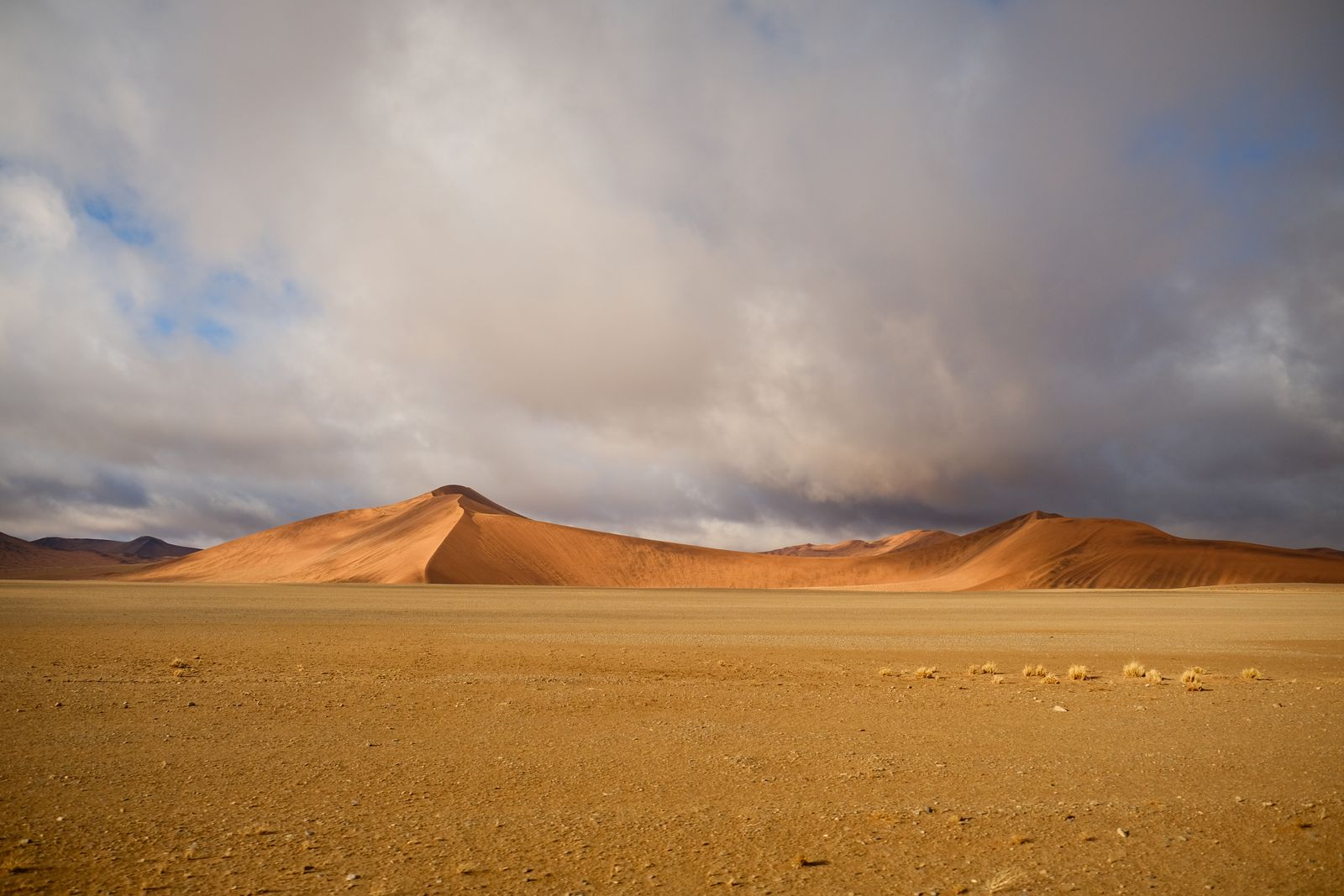
When the rains come, the desert transforms. Storm skies build over the dunes in the afternoons, the light turns theatrical, and photographers get the most dramatic conditions of the year. Baby animals arrive, migratory birds return in force, and the crowds thin out. Rates drop at many lodges. For a second-time visitor or a photographer, it can be the best season of all.
What it costs you
The trade-off is real. Once rain spreads drinking water across the landscape, animals no longer need the permanent waterholes, so Etosha's famous waterhole viewing becomes far less predictable. Game is dispersed and harder to find. Some gravel roads turn muddy or flood, temperatures climb, and you will drive further for your sightings.
Where it matters most
The green season is not uniform across the country. Sossusvlei and the coast are superb year-round; the dunes do not care about rain. It is Etosha and the far north where the difference bites hardest. A green-season trip weighted toward the desert and the coast, with Etosha kept modest, is a very good trip indeed.
Who it suits
First-timers chasing big game concentrations should still choose the dry season, May to October. But repeat safari-goers, photographers, birders and crowd-avoiders will find the green season quietly superb. And in low-rainfall years, which happen, the "rules" bend anyway.
The desert does not have a bad season. It has different ones.
Tell us when you can travel and we will design around the season, not against it.
Start an inquiry, and tell us when you are thinking of coming.